

Şenol Bahçelik / Allianz Türkiye - Agile Coach
If the parties are satisfied, the business partnership continues. The way to please your business partner is to understand what they want and how much they want it, and to respond to those requests. The best way to analyze these requests is the KANO Model developed by Japanese Professor Noriaki Kano. So what is the KANO Model? Let me explain...
In the business world, the purpose is clear: Business partners are satisfied with their work and they continue their cooperation in line with this satisfaction.
The methods are various.
At HEY!, our aim is to implement the method that will give the best return for the effort. Methods and models can also be applied to help HEY! in this regard.
The KANO Model is a great example. A method developed by Japanese professor Noriaki Kano in 1984 with the aim of determining customer satisfaction and linking it with product/service features.
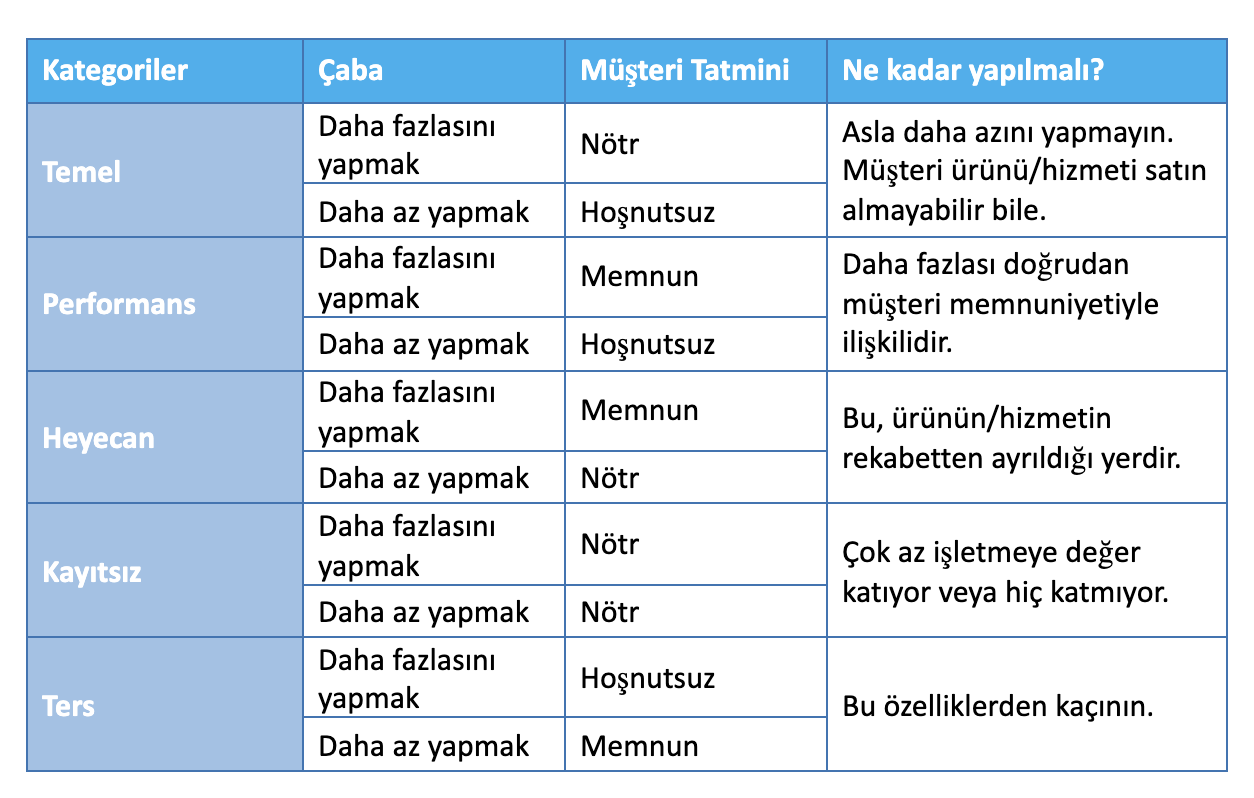
Because knowing the customer's wishes is not enough to be successful. It is also necessary to determine how much these requests affect customer satisfaction. KANO examines the product or service in 5 categories according to the customer's expectations.
- Performance
- Basic
- Excitement
- Indifferent
- Reverse
When we place the five categories on the satisfaction-performance axes, we see the performance of meeting the customer's needs perceptibly /physically on the horizontal axis and the perception of satisfaction level on the vertical axis.
Let's examine it now.
- Performance: These are the direct requests of the customer. If these are provided, customer satisfaction increases, if they decrease, their satisfaction decreases. It is necessary to remain competitive, it is the most salient needs of the model, the better the performance of the product/service will be, the more satisfaction customers get, and the worse performance will result in more dissatisfaction.
- Basic: This category includes the must-haves. There is no possibility that you will not be able to fulfill them. The loss here upsets the customer and there can be no excuses. But as the performance here increases, the satisfaction does not increase, it will be neutral.
- Excitement: Here comes the innovation. If there are innovations that the customer does not think of, features that are not in the competitors, in our product or service, our star shines at that point. It's worth the risk because if the customer likes it, satisfaction will increase, if not, there will be no negative impact. These are unexpected, pleasing and pleasant surprises, they surprise/excite customers, are unknown in the industry, differentiate the company, and in general, increase customer satisfaction beyond expectations.
- Indifferent: These are the features that don’t affect the degree of user satisfaction whether present or not. In both cases, satisfaction remains neutral.
- Reverse: We're in risky area now. We can make a lot of trouble. The features presented here may annoy the customer with their presence. The customer is satisfied without these.
What should we pay attention to when applying the KANO Model?
We should define user needs separately and divide each one into three groups under 3 main categories: Basic, Performance and Excitement.
Basic should be regarded as "Must-Have", Performance as "Need to Have", Excitement as "Would Be Nice to Have". If our aim is to make a difference, we start from "Would Be Nice to Have", and if we succeed, it will be very satisfactory for the customer.
Caution: Excitement is temporary.
The most critical point is that each of the NEEDS has a lifetime. “Excitement” today may turn into “Performance” or even “Basic” need tomorrow. And of course, the feelings that these needs evoke also change from customer to customer. You should also pay attention to it. Excitement does not arouse the same excitement in everyone.
P.S. You can contact us by clicking here to share your experiences and ask questions about the agile working method.


Comments